How to Select Cooling Solutions for Electrical Enclosures
Temperature is one of the key factors affecting the reliability and service life of electrical and electronic equipment installed inside an enclosure.
PLCs, variable frequency drives (VFDs), servo drives, power supplies, controllers and other electronic components generate heat during operation. If this heat is not properly removed, the internal enclosure temperature can rise significantly, potentially reducing equipment lifetime and causing system failures or unplanned downtime.
However, not every enclosure requires an air conditioner.
Depending on the heat load, ambient temperature, environmental conditions, IP requirements and required internal enclosure temperature, different thermal management technologies can be selected.
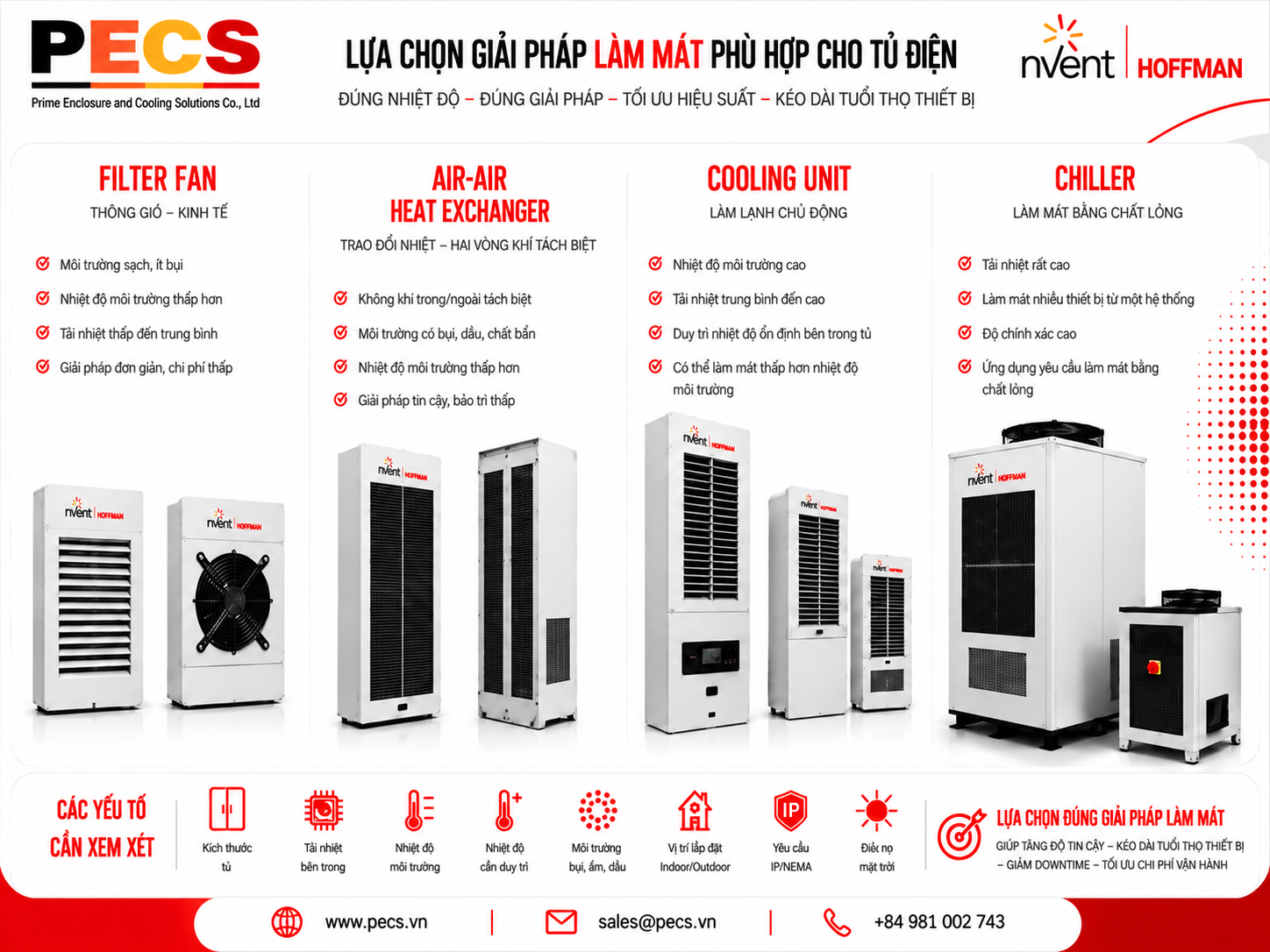
The four common solutions are: Filter Fan → Air-to-Air Heat Exchanger → Cooling Unit → Chiller
Each technology has its own operating principle and suitable application range.
1. FILTER FAN – SIMPLE AND COST-EFFECTIVE VENTILATION
How does it work?
A Filter Fan uses ambient air to remove heat from inside the enclosure. Cooler outside air is drawn through a filter into the enclosure while warm internal air is exhausted. This is an open-loop cooling system, meaning that internal and external air are directly exchanged.
Ambient Air → Filter Fan → Enclosure → Warm Air → Exhaust Filter
When should a Filter Fan be used?
Filter Fans are suitable when:
- Ambient temperature is lower than the required enclosure temperature.
- Internal heat load is relatively low.
- The environment is reasonably clean.
- Complete isolation between internal and external air is not required.
- A simple and economical thermal management solution is preferred.
Typical applications: PLC cabinets, control panels, electrical distribution panels, indoor automation cabinets, enclosures with low to moderate heat loads.
Limitation: A Filter Fan cannot cool the enclosure below ambient temperature. For example, if the factory ambient temperature is 40°C, a Filter Fan cannot maintain the enclosure at 30–35°C. Because outside air enters the enclosure, dust and humidity may also enter depending on the environmental conditions and protection level of the ventilation system.
2. AIR-TO-AIR HEAT EXCHANGER – CLOSED-LOOP HEAT TRANSFER
An Air-to-Air Heat Exchanger provides a useful alternative when outside air should not directly enter the enclosure.
How does it work?
Heat is transferred from the warm internal enclosure air to the external ambient air through a heat exchanger. The key difference compared with a Filter Fan is: The internal and external air streams remain separated.
There are two independent airflow circuits:
Internal Air Loop: Warm enclosure air → Heat Exchanger → Cooled air → Enclosure
External Air Loop: Ambient air → Heat Exchanger → Heat absorption → Exhaust
When should an Air-to-Air Heat Exchanger be used?
It is suitable when:
- Ambient temperature is lower than the required enclosure temperature.
- Direct entry of outside air into the enclosure should be avoided.
- The environment contains dust or contaminants.
- A relatively closed enclosure system is required.
- Lower maintenance compared with direct ventilation is preferred.
- Cooling below ambient temperature is not required.
Advantages:
- Compared with Filter Fans, an Air-to-Air Heat Exchanger provides better separation between the enclosure and the surrounding environment.
- Compared with Cooling Units, it generally offers: simpler construction, lower energy consumption, no compressor-based refrigeration circuit, Lower maintenance requirements.
Important limitation: An Air-to-Air Heat Exchanger still depends on ambient temperature. If the ambient temperature is equal to or higher than the required enclosure temperature, an Air-to-Air Heat Exchanger will not provide sufficient cooling.
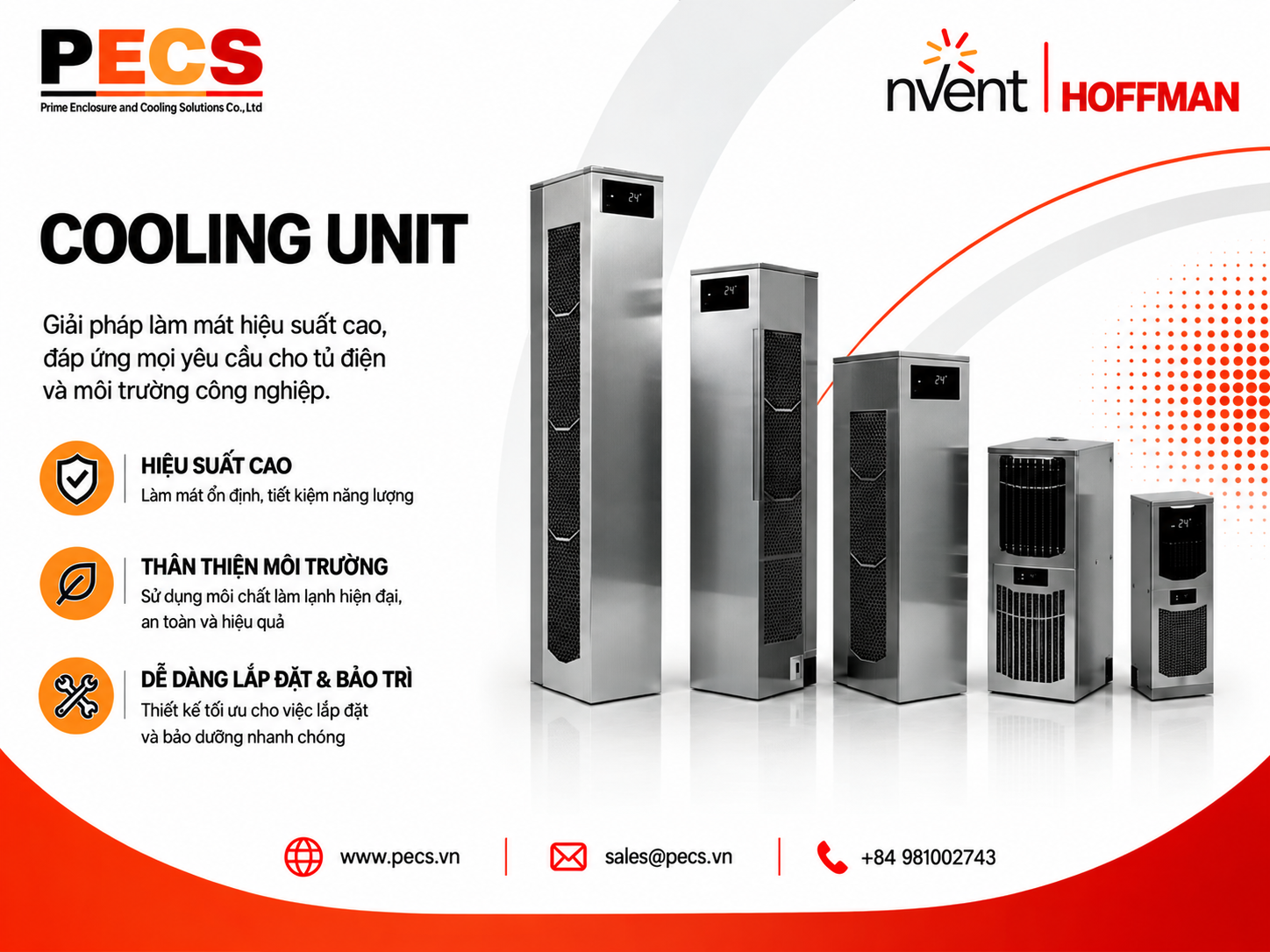
3. COOLING UNIT – ACTIVE COOLING FOR ELECTRICAL ENCLOSURES
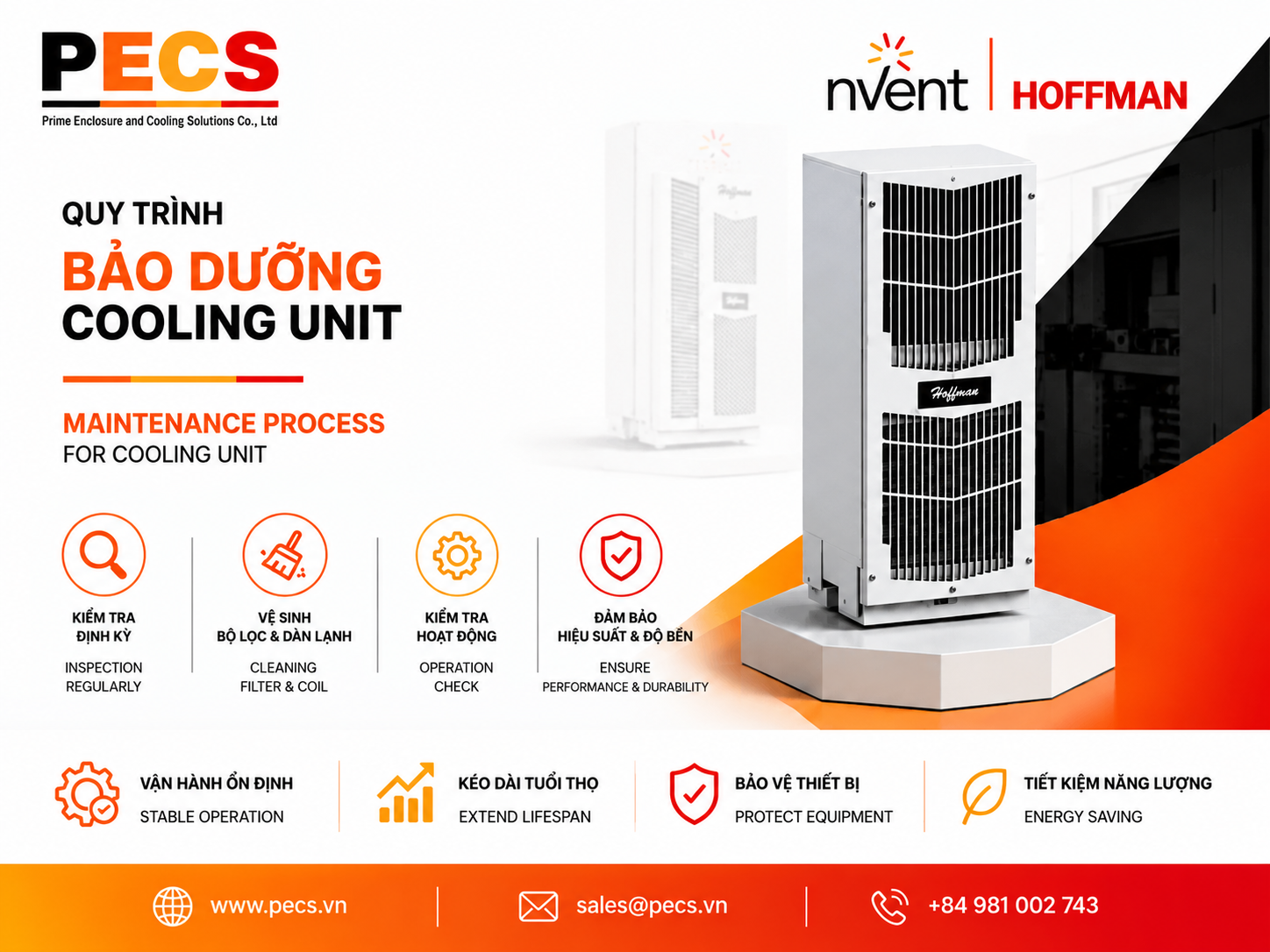
A Cooling Unit, or enclosure air conditioner, is commonly used for electrical cabinets with high heat loads or installations operating in hot industrial environments.
How does it work?
A Cooling Unit uses an active refrigeration cycle: Evaporator → Compressor → Condenser → Expansion Device. Heat is actively removed from the enclosure and rejected to the surrounding environment. Unlike Filter Fans and Air-to-Air Heat Exchangers, a Cooling Unit can: Maintain the enclosure temperature below ambient temperature. This is one of the most important criteria when selecting between passive heat-transfer solutions and active cooling.
When should a Cooling Unit be used?
Cooling Units are suitable when:
- Ambient temperature is high.
- Internal heat load is high.
- The enclosure contains VFDs, servo drives, PLCs, IPCs or other heat-sensitive electronics.
- Stable internal temperature control is required.
- Outside air should not directly enter the enclosure.
- The surrounding environment contains dust or contaminants.
- A closed-loop enclosure cooling system is required.
Typical applications: automation cabinets, VFD cabinets, servo control panels, production line control systems, machine tools, automotive manufacturing, ffod & beverage, water & wastewater, steel, cement and other high-temperature industrial environments.
Cooling Units are available in different configurations including indoor, outdoor, side-mount, recessed and partially recessed designs, depending on enclosure construction and installation requirements.
4. CHILLER – FOR HIGH HEAT LOADS AND PRECISION COOLING
When the required cooling capacity exceeds the practical range of enclosure-mounted Cooling Units, or when equipment requires liquid cooling, a Chiller may be the better solution.
How does it work?
Instead of directly cooling enclosure air, a Chiller cools a liquid, typically water or a water/glycol mixture. The chilled liquid is circulated to the equipment requiring cooling: Chiller → Chilled Liquid → Equipment / Heat Exchanger → Warm Liquid → Chiller
When should a Chiller be used?
Chillers are suitable when:
- Heat loads are very high.
- Precise temperature control is required.
- Multiple pieces of equipment need to be cooled from a centralized system.
- Equipment uses a liquid cooling circuit.
- Installation conditions make individual enclosure air conditioners impractical.
- Industrial processes require a stable source of chilled liquid.
Typical applications: Machine tools, CNC machines, laser cutting systems, welding systems, industrial process cooling, semiconductor equipment, laboratory equipment, high heat-load applications requiring liquid cooling.
5. QUICK COMPARISON
| Solution | Filter Fan | Air-to-Air Heat Exchanger | Cooling Unit | Chiller |
|---|---|---|---|---|
| Cooling principle | Ventilation | Heat transfer | Active refrigeration | Liquid cooling |
| Internal/external air | Mixed | Separated | Separated | Depends on system |
| Cooling below ambient | No | No | Yes | Yes |
| Heat-load capability | Low–Medium | Medium | Medium–High | High–Very High |
| Suitable for dusty environments | Limited | Better | Good | Good |
| Investment cost | Low | Medium | Higher | High |
| System complexity | Low | Low–Medium | Medium | High |
6. HOW TO MAKE THE RIGHT SELECTION
A simple selection guideline can be used as a starting point:
Ambient temperature below required enclosure temperature + clean environment → consider a Filter Fan.
Ambient temperature below required enclosure temperature + internal/external air must remain separated → consider an Air-to-Air Heat Exchanger.
High ambient temperature or required enclosure temperature below ambient → use a Cooling Unit.
Very high heat load or liquid cooling requirement → consider a Chiller.
For accurate product selection and cooling-capacity calculation, additional parameters should be considered:
- Enclosure dimensions.
- Enclosure material.
- Internal equipment heat dissipation.
- Maximum ambient temperature.
- Required internal enclosure temperature.
- Indoor or outdoor installation.
- Solar radiation for outdoor applications.
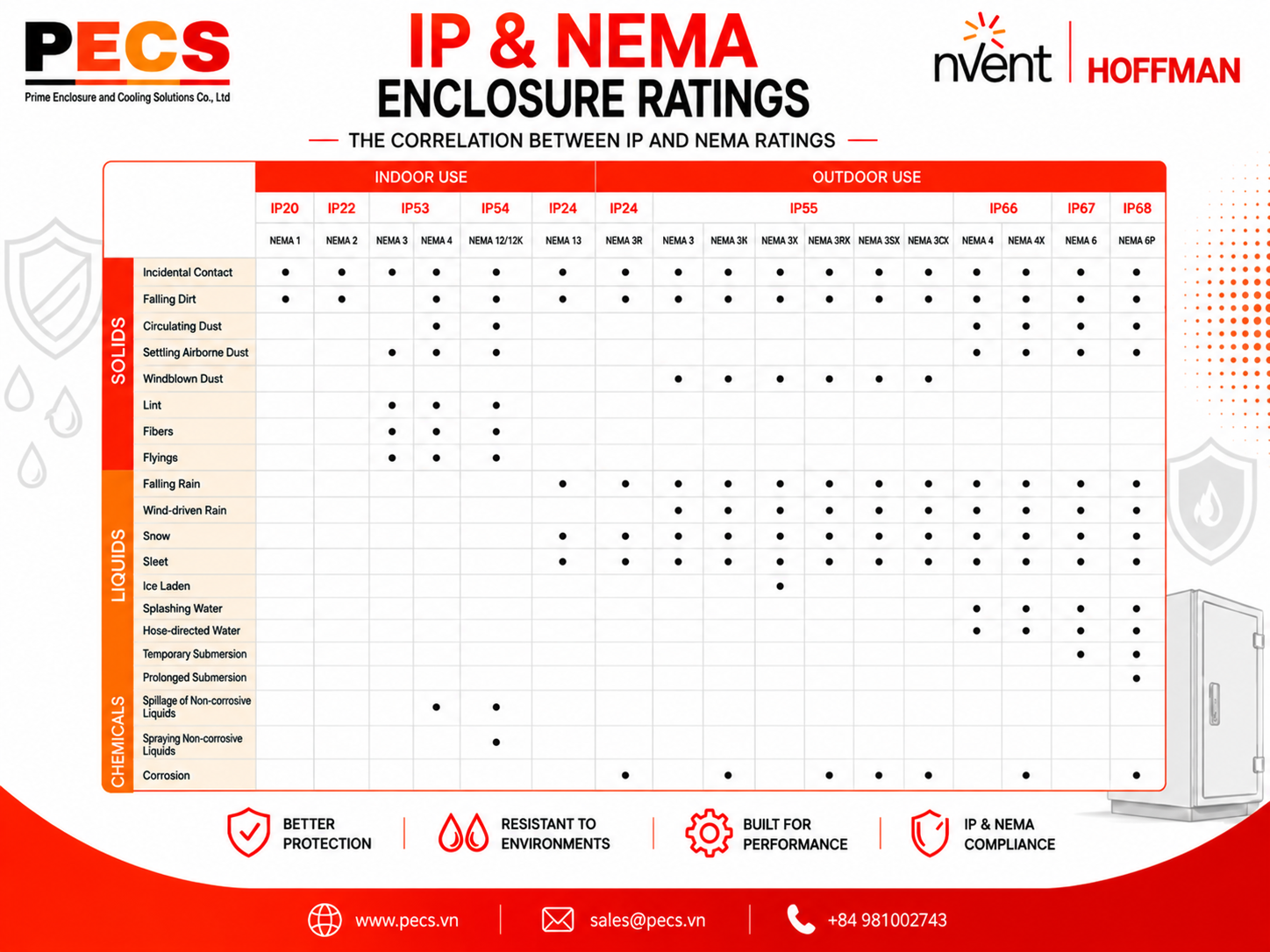
- Required IP/NEMA protection.
- Dust, oil, humidity and other environmental conditions.
Selecting the correct thermal management solution helps increase system reliability, extend equipment lifetime, reduce unplanned downtime and optimize overall operating costs.
PECS – ENCLOSURE & THERMAL MANAGEMENT SOLUTIONS
PECS provides enclosure and thermal management solutions for industrial applications, including Filter Fans, Heat Exchangers, Cooling Units and Chillers, supporting customers in selecting the appropriate solution according to actual heat loads and operating conditions.
Email: sales@pecs.vn
Hotline: +84 981 002 743