How to Size a Cooling Unit for an Electrical Enclosure
Why is Proper Cooling Capacity Important?
Modern electrical enclosures often house heat-generating equipment such as PLCs, variable frequency drives (VFDs), servo drives, power supplies, industrial PCs, and Ethernet switches.
As these devices operate, heat accumulates inside the enclosure. If the internal temperature exceeds the recommended operating range, it may result in:
- Reduced equipment lifespan
- Unexpected downtime
- Control system instability
- Lower overall system reliability
Selecting the correct cooling capacity is therefore essential for maintaining safe operating temperatures and maximizing equipment performance.
Key Factors to Consider
Choosing the appropriate cooling unit requires evaluating several factors rather than simply considering enclosure size.
1. Internal Heat Load
The most important parameter is the total heat generated by the equipment installed inside the enclosure.
Typical heat sources include:
- PLCs
- Variable Frequency Drives (VFDs)
- Servo Drives
- Power Supplies
- UPS Systems
- Industrial PCs
- Ethernet Switches
The greater the heat load, the higher the required cooling capacity.
2. Ambient Temperature
Cooling units remove heat by transferring it from inside the enclosure to the surrounding environment.
For example:
- Ambient temperature: 40°C
- Desired enclosure temperature: 35°C
The cooling unit must continuously remove both the internal heat load and any additional heat entering from the surrounding environment.
3. Enclosure Size and Material
The enclosure itself also influences cooling performance.
Factors include:
- Enclosure dimensions
- Internal air volume
- Construction material such as painted steel, stainless steel, or aluminum
These characteristics affect heat transfer and airflow inside the enclosure.
4. Installation Environment
Real-world installation conditions should also be evaluated, including:
- Indoor or outdoor installation
- Direct sunlight exposure
- Dust, oil, or chemical contamination
- Ambient humidity
- Multiple enclosures installed side by side
These factors may significantly increase the required cooling capacity.
Is a Larger Cooling Unit Always Better?
Selecting a cooling unit with excessive capacity does not necessarily improve performance.
Oversized cooling systems may result in:
- Higher initial investment
- Increased energy consumption
- More frequent compressor cycling, potentially reducing equipment life
Conversely, an undersized cooling unit may fail to maintain the required enclosure temperature, increasing the risk of overheating.
The most effective solution is selecting a cooling unit that matches the actual thermal load of the application.
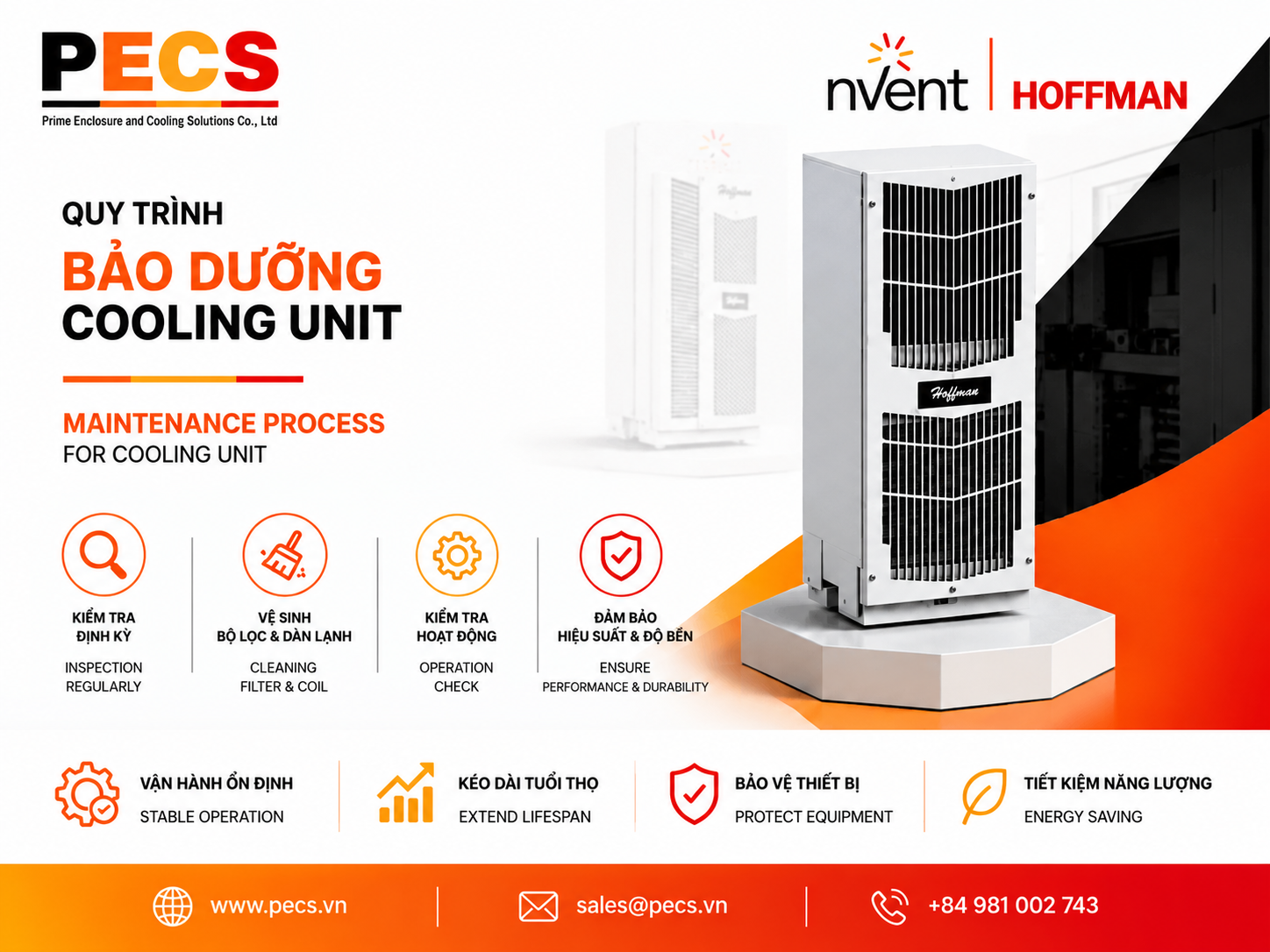
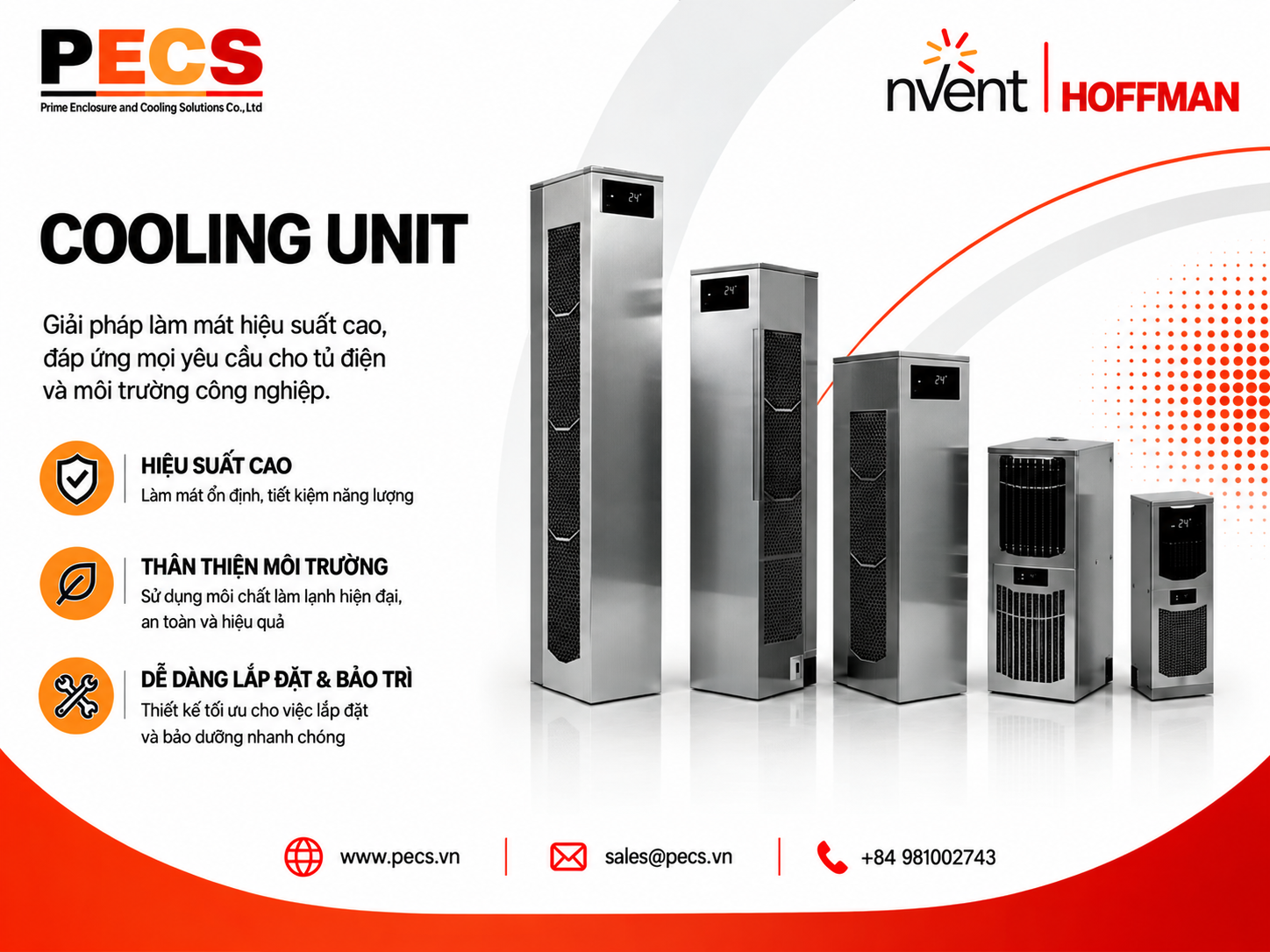
nVent HOFFMAN Cooling Solutions
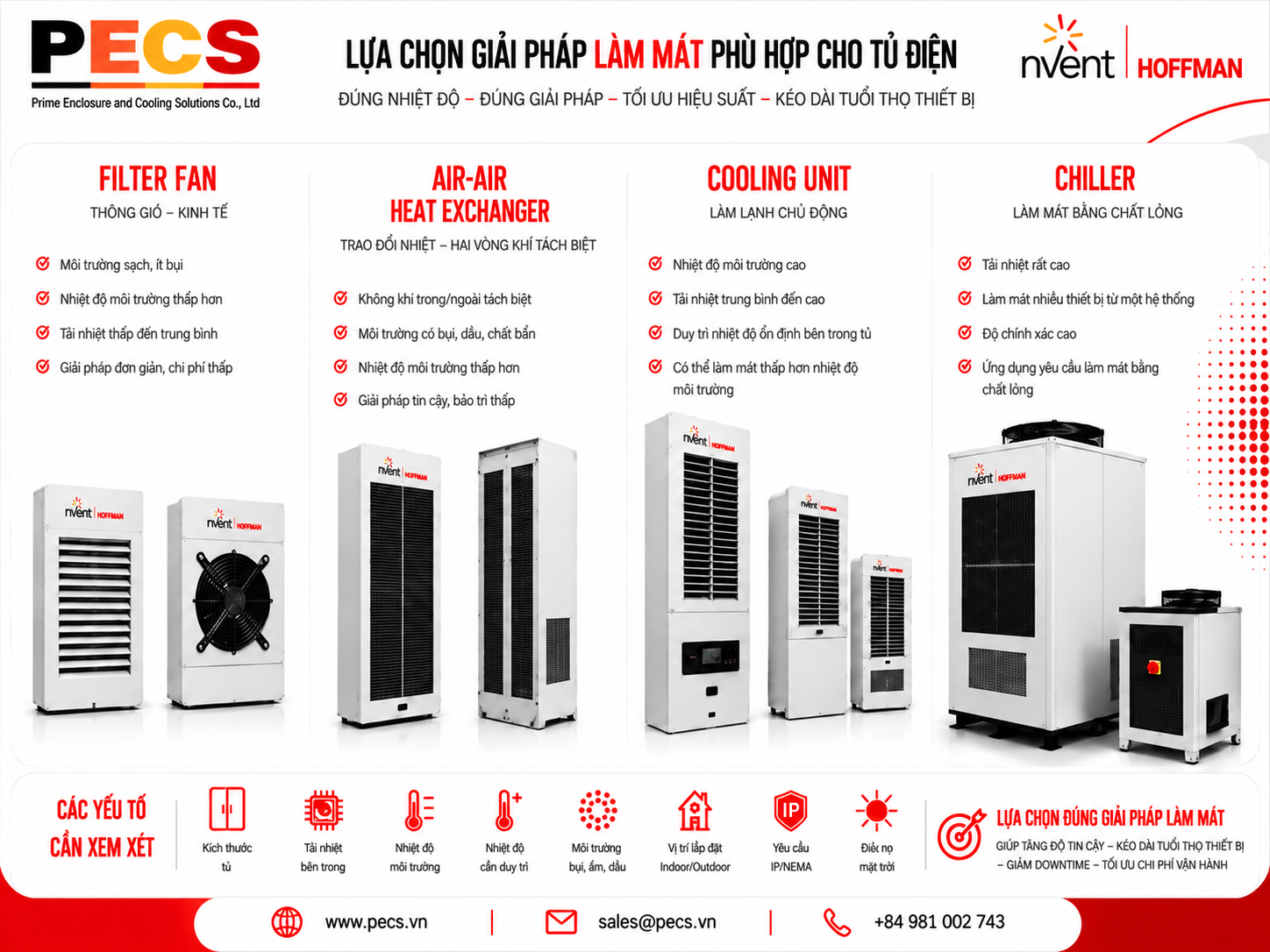
nVent HOFFMAN offers a comprehensive range of enclosure cooling units designed for industrial applications, covering a wide range of cooling capacities.
Key benefits include:
- High cooling efficiency
- Compact design
- Energy-efficient operation
- High reliability
- Easy installation and maintenance
- Suitable for demanding industrial environments
Many models also support remote monitoring and communication, allowing seamless integration into plant monitoring systems.
PECS Engineering Support
Proper cooling selection requires accurate thermal calculations and application expertise.
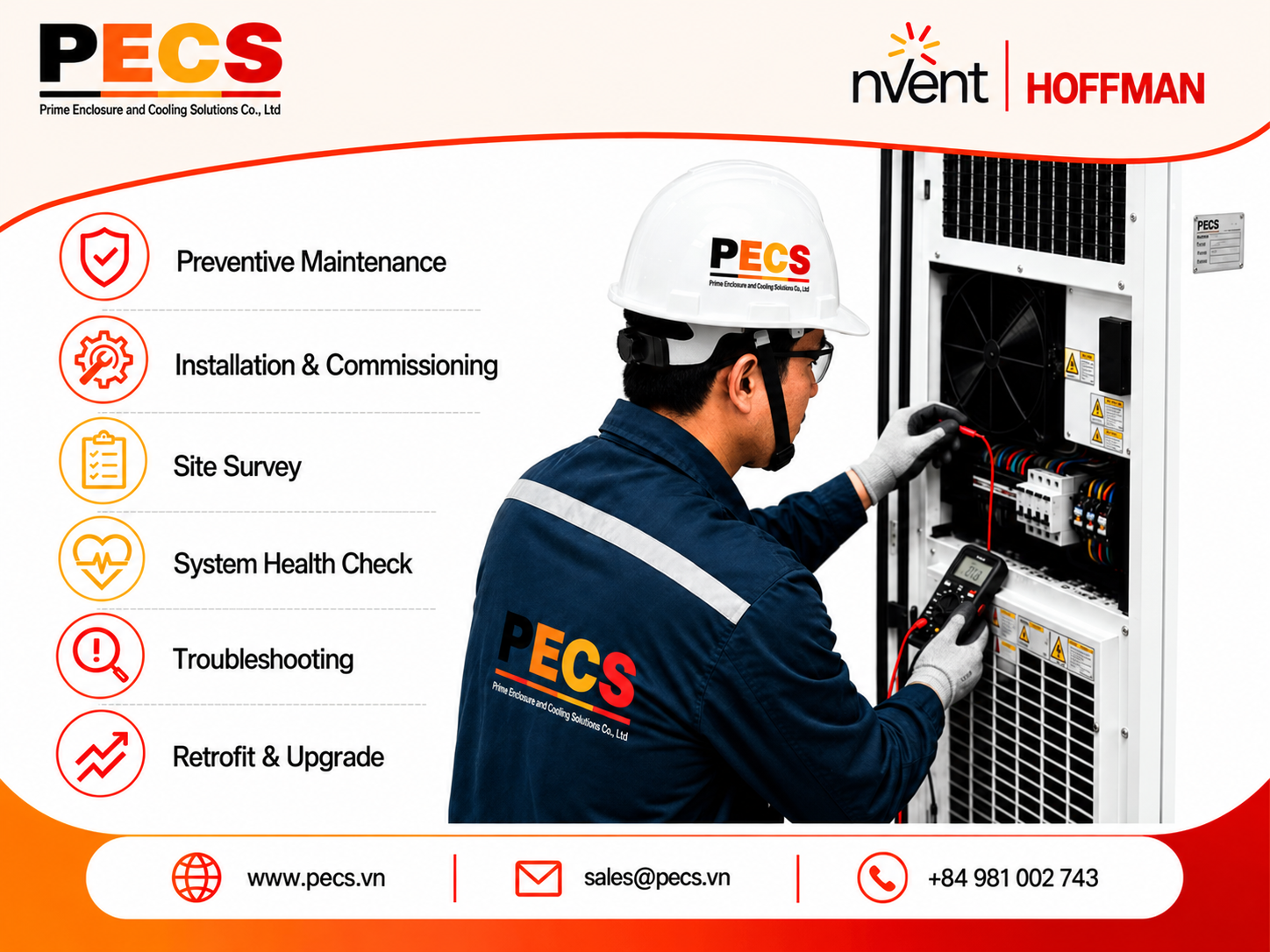
PECS provides professional engineering support, including:
- Enclosure heat load calculations
- Cooling unit selection
- Installation evaluation
- Thermal management consulting
- Energy-efficient cooling recommendations
With extensive experience in Industrial Enclosures and Thermal Management Solutions, PECS helps customers design reliable, efficient, and long-lasting electrical enclosure systems.